7 min read · 2025-12-06
Canon R6 Mark II vs R8: Rent in Amsterdam 2026 — FotoRent
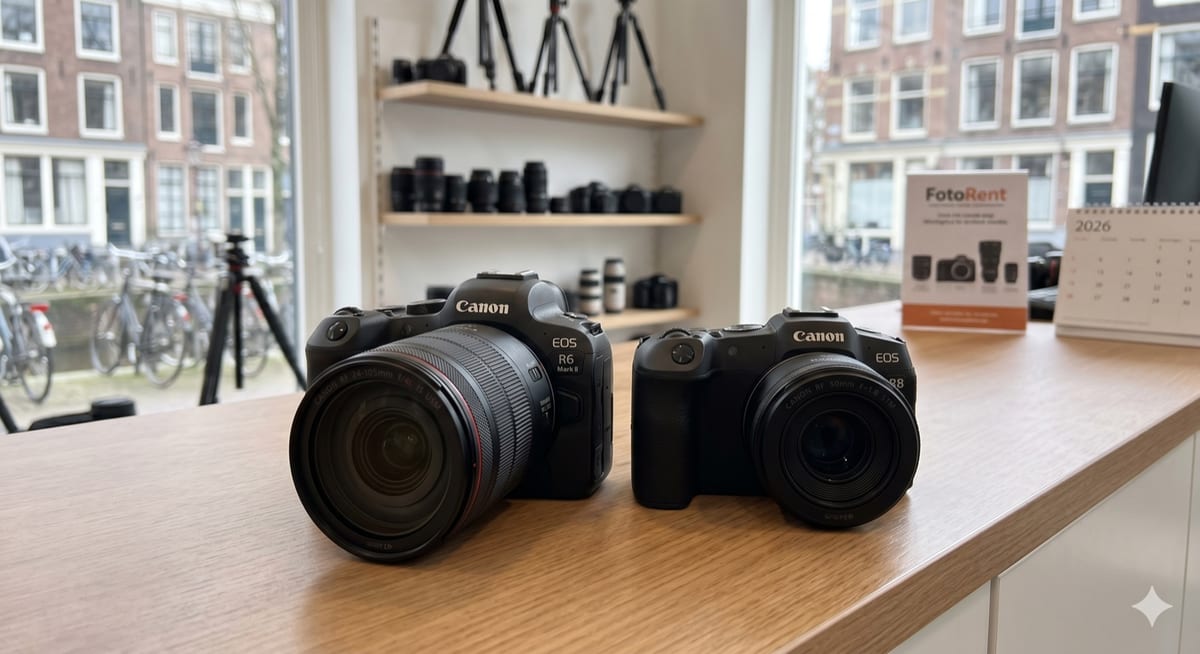
Choosing your next camera can be a daunting task, especially within Canon's own impressive lineup. The Canon EOS R6 Mark II and the EOS R8 present a classic dilemma: they share the very same 24.2MP full-frame sensor and DIGIC X processor—the heart and brain of the camera. On paper, their image quality is identical. So, where do the differences lie, and more importantly, which one is the right tool for your next project? As photographers and videographers, we know that specs only tell half the story. The feel, the features, and the workflow are what truly matter in the field. Here at FotoRent in Diemen, we help creators answer these questions every day. This comprehensive comparison will break down the key differences to help you decide whether the R6 Mark II or the R8 is the perfect camera for you to rent.
Image Quality and Sensor: A Tale of Two Twins
Let's start with the most crucial element: the image. Both the Canon R6 Mark II and the R8 are built around the same fantastic 24.2-megapixel full-frame CMOS sensor, paired with the powerful DIGIC X image processor. This shared core technology means that if your primary concern is pure, unadulterated image quality, you're in for a treat with either model. You can expect stunningly detailed photos with beautiful colour science, excellent dynamic range for recovering details in shadows and highlights, and impressive low-light performance. The ISO capabilities on both cameras are virtually identical, allowing you to shoot confidently in challenging lighting conditions without being overwhelmed by noise. Furthermore, they both inherit Canon's best-in-class Dual Pixel CMOS AF II system. This means you get lightning-fast, incredibly accurate autofocus that can intelligently track subjects like people, animals, and vehicles with tenacious precision. For a portrait photographer shooting in a studio or a landscape artist on a tripod, the final image file from an R8 will be indistinguishable from one shot on an R6 Mark II. This is fantastic news, as it levels the playing field and shifts the decision-making process towards other, more tangible factors like handling, features, and video capabilities.
Body, Handling, and Ergonomics: The Pro vs. The Traveller
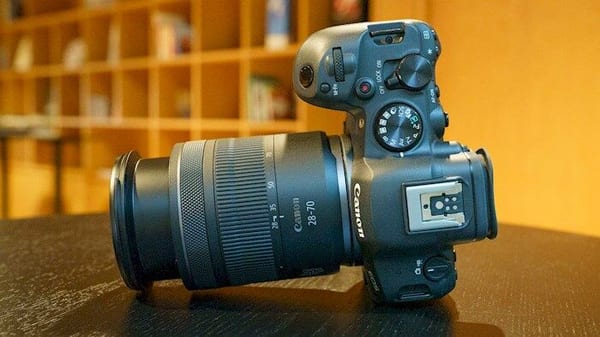
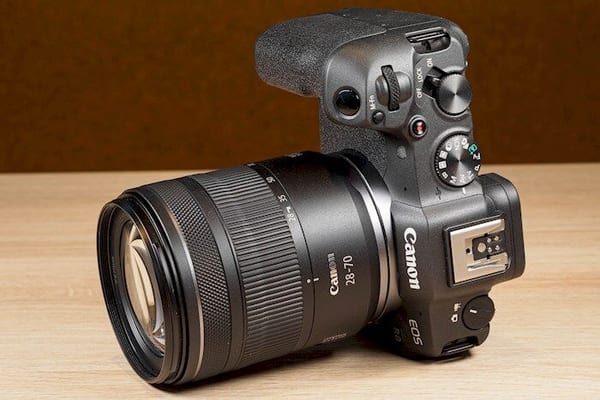
This is where the two cameras diverge significantly. The Canon R6 Mark II is built for the working professional. It features a more robust, weather-sealed body with a larger grip that provides a secure hold, especially with heavier L-series lenses. Its key advantages are threefold: In-Body Image Stabilization (IBIS), dual card slots, and a larger battery. The 5-axis IBIS offers up to 8 stops of compensation, a game-changer for handheld low-light photography and smooth video. The dual UHS-II card slots are a non-negotiable feature for professionals shooting weddings or events, providing instant backup and peace of mind. Finally, it uses the higher-capacity LP-E6NH battery, giving you much longer shooting times. In contrast, the Canon R8 is designed for portability and accessibility. It's significantly smaller and lighter, making it an ideal companion for travel, vlogging, or anyone looking to step up to full-frame without the bulk. To achieve this compact form, it sacrifices IBIS (relying on lens-based IS), has only a single UHS-II card slot, and uses the smaller LP-E17 battery. The control layout is also simpler, lacking the joystick found on the R6 II. The choice here is clear: if you need maximum reliability and features for paid work, the R6 Mark II is the obvious choice. The larger body feels perfectly balanced with pro glass, an experience you can test for yourself by renting our **Canon R6 MARK II 2 + 28-70 2.8 KIT** (from €24.00/day). If size, weight, and convenience are your priorities, the R8 is an incredibly powerful and compact package.
Video Capabilities: Nuances for the Hybrid Shooter
Both cameras are video powerhouses, but the R6 Mark II pulls ahead for serious filmmakers. Both can shoot beautiful, oversampled 4K video at up to 60fps and offer Canon Log 3 for maximum flexibility in post-production. Neither has the 30-minute recording limit of older cameras, which is a huge plus for interviews or long takes. However, the R6 Mark II's IBIS is a massive advantage for any handheld shooting, producing much smoother, more stable footage without a gimbal. It also offers the ability to output 6K ProRes RAW video to an external recorder, a feature reserved for high-end cinema cameras just a few years ago. Furthermore, it includes a dedicated headphone jack for monitoring audio, a crucial feature for professional sound quality. The R8, while incredibly capable, lacks these pro-level features. It has no IBIS, meaning you'll want to use lenses with optical stabilization or rely on a tripod or gimbal for the best results. It also omits the headphone jack, requiring an adapter through its multi-function shoe. Despite these limitations, the R8 should not be underestimated. For creators who primarily shoot on a gimbal or tripod, its lightweight body is a benefit. The 4K/60p video quality is identical to its bigger brother, making it a phenomenal B-camera or a primary camera for controlled shooting environments. Our **CANON R8 + 28-70mm 2.8 LENS** kit (from €20.00/day) is a perfect, lightweight setup for capturing cinematic travel videos or high-quality content for social media.
Performance and Speed: Shutter and Burst Rate Details
When it comes to speed, both cameras boast an impressive 40 frames per second burst rate using the electronic shutter. This is incredible for capturing fast-moving action, from sports to wildlife. However, the shutter mechanism itself is another key point of difference. The R6 Mark II features both a full mechanical shutter (up to 12fps) and an electronic shutter. The mechanical shutter is essential for photographers who use flash, as it allows for higher sync speeds and avoids the potential for banding under certain types of artificial light. This makes the R6 Mark II far more versatile for studio work, event photography, or any situation involving strobes. The Canon R8, in its quest for compactness, omits the full mechanical shutter. It offers an Electronic First-Curtain Shutter (EFCS) at up to 6fps, and the same 40fps electronic shutter. While the electronic shutter is fantastic for silent shooting and high burst rates, it can be susceptible to 'rolling shutter' distortion with very fast-moving subjects and can cause issues with flash photography and certain types of flickering lights. For natural light photographers and videographers, this is rarely an issue. But for those who rely heavily on flash or shoot fast-paced sports where object distortion is a concern, the mechanical shutter in the R6 Mark II provides a significant, professional advantage.
The choice between the Canon R6 Mark II and the R8 comes down to your specific needs and priorities. They are both exceptional cameras that share the same brilliant imaging core. The R6 Mark II is the professional's tool: a reliable, feature-packed workhorse built for demanding situations where performance and redundancy are key. The R8 is the enthusiast's dream: it democratizes professional-grade image quality, packing it into a compact, lightweight, and more affordable body perfect for travel, content creation, and everyday photography. The best way to truly know which camera fits your hands and your workflow is to try them out. Stop by FotoRent in Diemen, just a short trip from Amsterdam, and our team will be happy to help you. Rent the **Canon R6 MARK II 2 + 28-70 2.8 KIT** or the **CANON R8 + 28-70mm 2.8 LENS** and discover which one will elevate your next creative project.