8 min read · 2025-12-06
FPV Drone Beginners Guide: Learn to Fly Today!
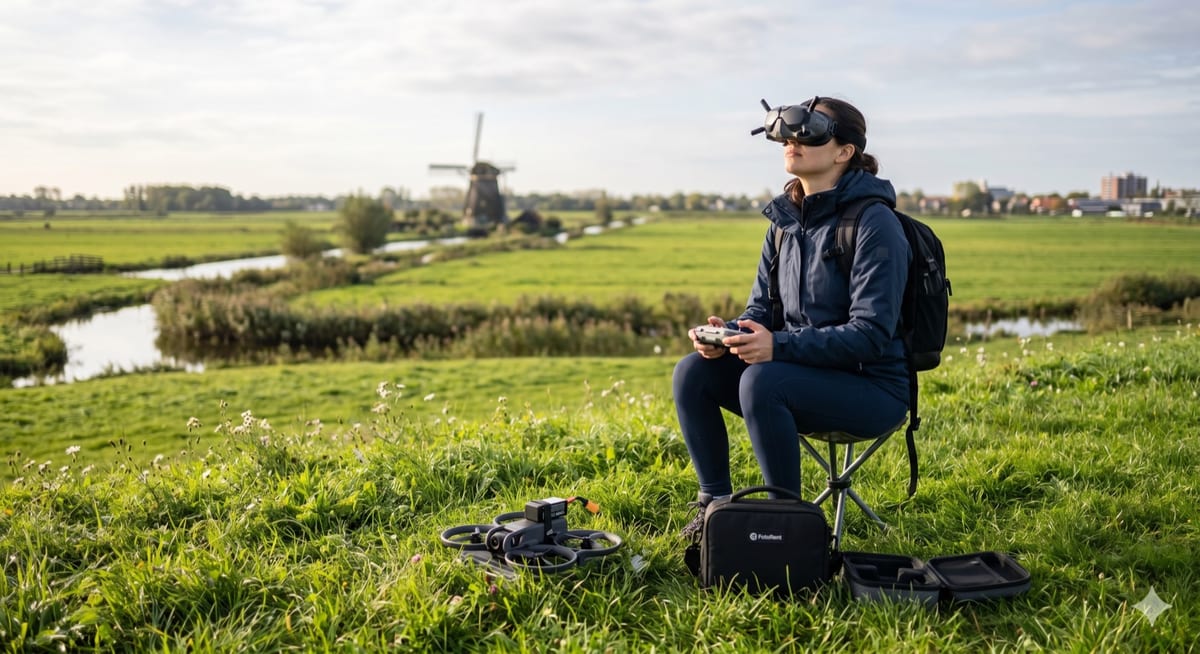
Have you ever seen those breathtaking, high-speed videos that swoop through forests, dive down buildings, and skim across water with impossible grace? That's the magic of FPV—First-Person View—drone flying. It’s an experience that puts you directly in the cockpit, offering a sense of flight unlike any other. But for many aspiring pilots, the technical jargon, steep learning curve, and high initial cost can feel intimidating. That's where we come in. Here at FotoRent Amsterdam, we believe everyone should have the chance to experience this incredible hobby. This guide will walk you through everything you need to know to start your journey, proving that with the right approach (and perhaps the right rental), you can learn to fly FPV.
What is FPV and How Is It Different?
FPV stands for First-Person View. Unlike standard camera drones like the DJI Mavic series, where you typically watch the video feed on a phone or tablet, FPV flying uses a pair of goggles. These goggles display a live, low-latency video feed directly from a camera on the front of the drone. The result is a deeply immersive experience; you feel as if you are actually sitting inside the drone, seeing what it sees in real-time. This fundamental difference shapes the entire experience. Standard GPS drones are designed for stability, cinematic smoothness, and ease of use, often featuring automated flight modes and obstacle avoidance. FPV drones, on the other hand, are built for agility, speed, and direct manual control. Most serious FPV pilots fly in 'Acro Mode,' a fully manual mode that disables all self-leveling. This means you have complete control over the drone's orientation, allowing for flips, rolls, and dives that are impossible with a typical camera drone. It's the difference between being a passenger on a commercial flight and being the pilot of a stunt plane. The core FPV setup consists of three main components: the drone itself, the FPV goggles, and the radio controller. Each piece communicates with the others to create that seamless, in-the-cockpit feeling.
Your First Crucial Step: Simulators and Safety
Before you even think about powering up a real drone, your journey must begin in the digital world. We cannot stress this enough: start with an FPV simulator. Crashing is an inevitable part of learning FPV, and a simulator allows you to crash hundreds of times without costing you a single euro in repairs. It is the single most effective tool for building the essential muscle memory required for FPV flight. Popular simulators like Liftoff, DRL Simulator, and VelociDrone offer hyper-realistic physics that accurately mimic how a real drone will behave. You can connect a real FPV radio controller to your computer to make the experience as authentic as possible. Dedicate at least 10-20 hours in the simulator, practicing basic maneuvers like hovering, turning, and flying simple circuits. Once you feel comfortable in the virtual world, you can transition to the real one. Safety is paramount. Find a large, open space like a field, far away from people, buildings, and roads. In the Netherlands, drone regulations are strict and for good reason. Always check the latest rules from the official government sources regarding where you can fly, weight classes, and required licenses (like the A1/A3 certificate). Flying responsibly not only keeps you and others safe but also protects the reputation of the entire FPV community. A clear, open area gives you the space you need to make mistakes, which you will, and that's perfectly okay.
Choosing Your First Drone: The Smart Way to Start
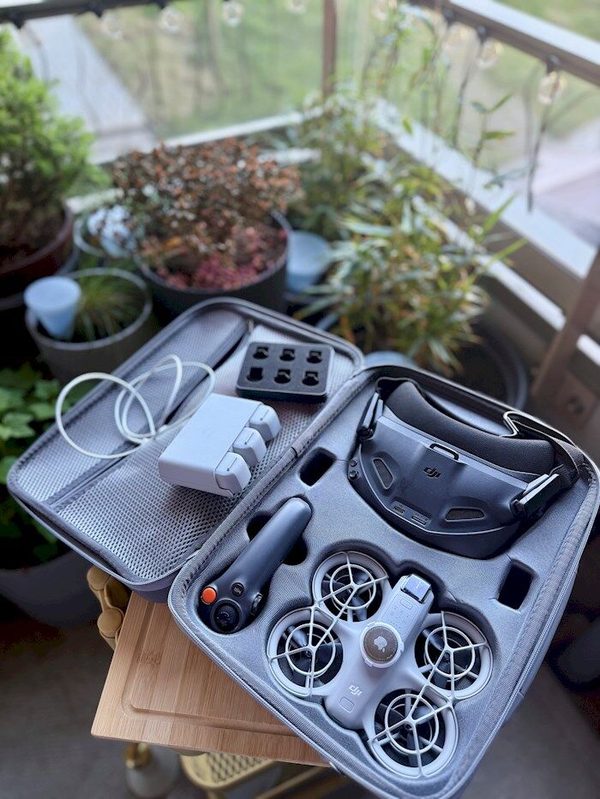
When you're ready for a real drone, you'll face a big decision: build, buy, or rent? While building a drone from scratch is a rewarding part of the hobby for many, it's a steep technical challenge for a complete beginner. A better option is to buy a pre-built drone, often called a 'Bind-N-Fly' (BNF) or 'Ready-To-Fly' (RTF) kit. However, the best and most cost-effective way to begin is by renting. This allows you to experience high-quality gear and confirm your passion for the hobby without the hefty upfront investment of over €1000. At FotoRent, we've curated the perfect kits for beginners. For an incredibly user-friendly and safe introduction, we highly recommend the **DJI Avata 2 + Goggles 2 FPV KIT**. It features prop guards, an intuitive motion controller, and excellent image quality, making it the ideal choice to get airborne with confidence. You can try this complete setup starting from just €25.00/day. Another fantastic and highly accessible option is the **DJI NEO + Goggles 3N FPV KIT**, available from €15.00/day. It provides the full immersive experience in a durable and easy-to-manage package. Renting from our shop in Diemen lets you skip the complicated setup and dive straight into the fun part: flying. Our team can even give you a few pointers when you pick up the gear.
Mastering the Basics: Your First Real Flights
With your rented kit in hand and simulator hours under your belt, it's time for your first real flight. It will feel different—the adrenaline is real! Start with a pre-flight checklist: ensure propellers are secure and undamaged, the battery is fully charged and strapped in tightly, and your goggles have a clear video signal. Place the drone on a flat surface, stand back a safe distance, and 'arm' it, which starts the propellers spinning. Gently increase the throttle to take off and try to hover a meter or two off the ground. You'll quickly discover that hovering in Acro mode is a constant dance of tiny adjustments with the control sticks. This is where your simulator practice pays off. Focus on the core controls. The right stick controls 'pitch' (tilting forward/backward) and 'roll' (tilting left/right). The left stick controls 'yaw' (rotating left/right) and 'throttle' (altitude). Start by flying simple, slow patterns. Fly away from yourself, then turn and fly back. Practice gentle turns and figure-eights. The goal isn't to perform tricks but to build a solid foundation of control. Always be mindful of your battery life. Set a timer on your controller or phone and land with at least 20-25% battery remaining to protect the battery's health. Your first few flights should be short, controlled, and focused on building confidence. Embrace the learning process, and don't be discouraged by a few bumpy landings.
The world of FPV is an exhilarating fusion of technology, skill, and creative freedom. It offers a perspective on the world that was once impossible. While the path to becoming a skilled pilot requires patience and practice, the journey is incredibly rewarding. By starting with a simulator, prioritizing safety, and making smart choices about your gear, you can unlock the unparalleled thrill of FPV flight. Ready to take to the skies without the massive upfront investment? Your adventure is just a rental away. Visit us at FotoRent in Diemen or browse our website to book a beginner-friendly kit like the **DJI Avata 2**. We're here to help you get started on your FPV journey.